"Little by little, as they gained strength and the tension went out of their nerves, a marvelous feeling of security came over all of them, dimmed only by the knowledge of the responsibility they bore to the castaways back on Elephant Island."
Shackleton had made it to land, however, the ship did not have what it took to carry all the way on to where they could find help. They were going to have to cross the peaks of South Georgia in order to make it to civilization. The peaks were very steep but Shackleton and his crew managed to slowly and cautiously make their way past the large drops. They hurried through the peaks, knowing that if they took too long they would freeze to death in the high altitude. After the long struggle in the cold, unforgiving mountains Shackleton and his two companions made it to the whaling yard, where they meet up with sorrella, who was surprised to see them alive. The man cast away on Elephant Island were all soon saved.
Such a spectacular feet of survival, the crew of the Endurance exhibit what it takes in order to survive in some of the worst conditions known to man. They all obtained courage, selflessness, valor, and a strong bond that connected each other. They show the power of the human being in such rotten conditions.
Sunday, August 7, 2011

Saturday, August 6, 2011
Voyage of the Ciard
“To classify the dangers they faced in order of magnitude would have been impossible, but of the known threats the greatest undoubtedly was ice—especially at night. One single collision with an unseen fragment could have ended the journey in a moment.”

From the very start of their risky voyage, Shackleton and the men realized that surviving on land was cozy compared to surviving on the open ocean in their small vessel. Their was the constant spray of the ocean, freezing on the men and chilling them to the bone. The crew also faced the constant threat of colliding with the ice bergs and enduring some unfathomable storms. Each man would take turns knocking ice that collected on the boat during storms. Despite all their trials some men continued to hold high spirits including Macty who is displayed in this dialogue, “Macty the most irrepressible optimist I’ve ever met. When I relieve him at the helm, boat iced and seas pourg: down yr neck informs me with a happy grin ‘It’s a grand day sir’ I was feeling a bit sour just before…” After all the adversity the members of the Caird spot land and days later make it to shore.
When the men finally reach shore, I can’t help but be reminded of the movie Apollo 13, starring Tom Hanks. In this movie, three astronauts are lifted off into space with their mission to land on the moon and come back with many samples. However their mission is compromised when a piece of space shuttle malfunctions and the entire operation becomes a rescue mission. Despite their many obstacles, the astronauts very narrowly escape home as the harrowing survivors.
No Rest for the Weary (1-5)
"They realized, as one man said, that "Elephant Island had flattered only to deceive." She had revealed her true face to them, and the sight of it was ugly."
After the seemingly endless voyage on the boats, the crew finally had made it too Elephant Island where they joyfully ate all that they could manage then slept undisturbed for what seemed like an eternity. However, upon getting up the men heard the frightful news that Shackleton had given orders that they pack up and make for another coast that is safer and less prone to high tides and dangerous storms. Shackleton is relieved that he has delivered his crew to the land but he realizes that it would be difficult to deliver all of them on the three diminutive vessels across the open ocean. So with the qualities of an Epic Hero, Shackleton decides to make the voyage across the open sea with five hand-picked mates and a supply of food. Wild is left in charge of the rest of the men on the island. Before he leaves, Shackleton speaks with Wild, advising him on what to do in certain situations, he then takes off leaving the rest of his crew waiting for rescue.
After the seemingly endless voyage on the boats, the crew finally had made it too Elephant Island where they joyfully ate all that they could manage then slept undisturbed for what seemed like an eternity. However, upon getting up the men heard the frightful news that Shackleton had given orders that they pack up and make for another coast that is safer and less prone to high tides and dangerous storms. Shackleton is relieved that he has delivered his crew to the land but he realizes that it would be difficult to deliver all of them on the three diminutive vessels across the open ocean. So with the qualities of an Epic Hero, Shackleton decides to make the voyage across the open sea with five hand-picked mates and a supply of food. Wild is left in charge of the rest of the men on the island. Before he leaves, Shackleton speaks with Wild, advising him on what to do in certain situations, he then takes off leaving the rest of his crew waiting for rescue.
Voyage to the Islands (1-5)
"Alone, alone. all, all alone,
Alone on a wide wide sea."

The men sailed toward the islands on the small boats, stopping only at night. They're conditions worsened from the cold water being splashed on them, to the lack of sleep. They stopped landing on floes during their journey to the island, because many of the floes around them were unstable and dangerous learned from the first two times they made camp on one. The men took the punches with the idea that they were one step closer to land. However when Worsley measured the distance to their destination he found that they were actually farther away from the island than when they had started. Taking this viscious blow, the men carried onto the open ocean, where they faced gargantuan swells in the water. This portion of the book would have to be the climax. It exhibits the men's final and last resort to freedom. Their position right now is either do or die.
This final act of the men to survive reminds me of the motion picture, Defiance, about a group of Jewish refugees who hide out in the woods away from the SS. At the climax of the movie, the Nazi's have discovered where the refugees hide and send a large force to dispatch of them. They hurriedly escape to find a vast swamp for miles in front of them. With the attitude of do or die, the refugees trudge through the dark, dangerous swamp for miles, with all of their might to make it to freedom.
Thursday, August 4, 2011
A Leap of Faith (5 and 6)
"At ten thirty, Shackleton's booming brogue rang out: "Strike the tents and clear the boats!""

After the hardships on the floe, the crew finally managed to spot land some forty two miles away. However, they were concerned to launch the boats due to the open sea and fast flowing ice bergs. So they continued to wait for their flow to decrease distance or any moment when the sea looked safe. They stayed on the floe for two more weeks and struck gold with the hunting of two 1000 pound sea leopards. Also because the last of the dogs were no longer needed, Macklin's team and the puppy team were all killed and eaten. There is a feeling of Pathos when reading the description of one of the dogs happily munching on a bone before being shot.
Finally, Shackleton had no choice to order for the launching of the boats as the floe started to become more and more unstable due to the warmer weather. The men dodged around the cracks in the ice and loaded up all the boats and left. This abruptness reminds me of a film called Flight of the Phoenix. In the movie, a group of people are stranded in the desert and have to try to reassemble their crashed airplane in order to escape. However they have to take a crash course in flying when a gang of desert thugs discover the survivors and arrive to kill them. The survivors quickly board the plane, not even knowing if it will fly, and escape the blood-thirsty criminals in the knick of time. Both of these incidents have to do with a leap of faith.
Monday, August 1, 2011
Hard times on the Floe (1-4)
"We have just been a third of a year on the floe, drifting as Nature has willed. I wonder when we shall see home again."
Since the men have been on the Floe, they have switched to many different camps in search for better accommodations while they waited to spot land. However, there efforts do not help for the food supply is greatly diminished and the warmer temperatures seem to be working against them. To adapt to the pressures of the lack of food. The men must kill their dogs to lessen the distribution of food. The men dutifully kill their dogs, knowing that it is worth their survival although they have grown very attached to their team. Through all this the men only wish that they can once again be on land. The frustration of the men's predicament can be understood by the sarcasm of Worsley, "we are probably hurtling to the North at the incredible speed of 1 mile an hour!"
This frustration of sitting and waiting for hope to arrive reminds me of the television series Lost. The show lasted 6 seasons and the entire time these people continually found it hard to get off the island. Despite all of their best efforts there was always some other entity or group that prevented them from achieving their goal. They might have been about to signal a navy ship with a radio when somebody destroyed it, or perhaps they were about to escape on a raft when a group of strangers burnt it. That hopelessness is present in both Shackleton's voyage and in Lost.
Since the men have been on the Floe, they have switched to many different camps in search for better accommodations while they waited to spot land. However, there efforts do not help for the food supply is greatly diminished and the warmer temperatures seem to be working against them. To adapt to the pressures of the lack of food. The men must kill their dogs to lessen the distribution of food. The men dutifully kill their dogs, knowing that it is worth their survival although they have grown very attached to their team. Through all this the men only wish that they can once again be on land. The frustration of the men's predicament can be understood by the sarcasm of Worsley, "we are probably hurtling to the North at the incredible speed of 1 mile an hour!"
This frustration of sitting and waiting for hope to arrive reminds me of the television series Lost. The show lasted 6 seasons and the entire time these people continually found it hard to get off the island. Despite all of their best efforts there was always some other entity or group that prevented them from achieving their goal. They might have been about to signal a navy ship with a radio when somebody destroyed it, or perhaps they were about to escape on a raft when a group of strangers burnt it. That hopelessness is present in both Shackleton's voyage and in Lost.
Friday, July 29, 2011
Death of the Endurance (4 to 6) Tone
"Away across the pack, the stern of the Endurance rose 20 feet into the air and hung there for a moment with her motionless propeller and her smashed rudder held aloft. Then slowly, silently she disappeared beneath the ice, leaving only a small gap of black, open water to mark where she had been."

As the Endurance sank, the men felt farther from their homes more than ever. Although was completely useless in the ice, it still held for a symbol of civilization. With the ship gone the men had to continue to hope and pray that the winds would help carry their floe towards land. Meanwhile, with the loss of their tie to civilization the men soon start following some of the morals they once held in order to survive, such as the gruesome slaughter of seals using pickaxes and knives. All of these incidents the author writes with a very serious and glum tone. Things are starting to become more and more desperate and the crew is finally starting to see that.
The killing of the seals reminds me of the western expansion of North America. Riding out into the unpredictable wilderness, the pioneers had to adapt and succumb to very shameful acts in order to survive, even cannibalism. These two incidents show how far a human being can go in order to survive.

As the Endurance sank, the men felt farther from their homes more than ever. Although was completely useless in the ice, it still held for a symbol of civilization. With the ship gone the men had to continue to hope and pray that the winds would help carry their floe towards land. Meanwhile, with the loss of their tie to civilization the men soon start following some of the morals they once held in order to survive, such as the gruesome slaughter of seals using pickaxes and knives. All of these incidents the author writes with a very serious and glum tone. Things are starting to become more and more desperate and the crew is finally starting to see that.
The killing of the seals reminds me of the western expansion of North America. Riding out into the unpredictable wilderness, the pioneers had to adapt and succumb to very shameful acts in order to survive, even cannibalism. These two incidents show how far a human being can go in order to survive.
Wednesday, July 27, 2011
Sacrifice (1 and 2)
"After he had spoken, he reached under his parka and took out a gold cigarette case and several gold sovereigns and threw them into the snow at his feet."

As the Endurance is stuck being crushed by the gargantuan ice floes, the men continue on without her. For their successful survival, the men are asked to only carry their bare essentials to survive. Even expensive possessions of gold, as stated when Shackleton threw down his gold cigarette lighter. Even some of the young puppies are forced to be sacrificed for the overall survival of the ship mates. Macklin had taken care of one of the older puppies, Sirius, for quite some time and had much trouble having to kill young pup as it hopped around playfully right before the shooting.
Nevertheless, the men march on, pushing the 1 ton boats through the thick snow. Progress is so slow that Shackleton comes to a dilemma, either continue carrying the boats towards land or set up camp and see where the ice floe may lead them. Shackleton finally decides on setting up camp because the men are only averaging a little over a mile a day. When Macklin has to kill Sirius, it reminds me much of Ol' Yeller. At the end of Ol' Yeller, despite all the history the boy had had with his beloved yellow dog, he must kill the mutt because it is sick and there is nothing he can do about it. Macklin must have been having the same type of emotions go through him when he had to shoot the young pup who was so naive of what was about to happen.

As the Endurance is stuck being crushed by the gargantuan ice floes, the men continue on without her. For their successful survival, the men are asked to only carry their bare essentials to survive. Even expensive possessions of gold, as stated when Shackleton threw down his gold cigarette lighter. Even some of the young puppies are forced to be sacrificed for the overall survival of the ship mates. Macklin had taken care of one of the older puppies, Sirius, for quite some time and had much trouble having to kill young pup as it hopped around playfully right before the shooting.
Nevertheless, the men march on, pushing the 1 ton boats through the thick snow. Progress is so slow that Shackleton comes to a dilemma, either continue carrying the boats towards land or set up camp and see where the ice floe may lead them. Shackleton finally decides on setting up camp because the men are only averaging a little over a mile a day. When Macklin has to kill Sirius, it reminds me much of Ol' Yeller. At the end of Ol' Yeller, despite all the history the boy had had with his beloved yellow dog, he must kill the mutt because it is sick and there is nothing he can do about it. Macklin must have been having the same type of emotions go through him when he had to shoot the young pup who was so naive of what was about to happen.
Sunday, July 24, 2011
The Ice Takes its Toll (7 and 8) Turning Point
"She's going boys," he said. "I think it's time to get off."
 Despite the fierce retaliation of the Endurance, by the end of winter, the ice had finally gotten the best of her. It started with two strong attacks to the port-side of the ship. Neither attacks seemed to have much affect until a floe slide its way under the Endurance and tilted her to the left. However, this floe eventually cracked and the Endurance escaped until to be entrapped by three floes on all sides. The floes mercilessly put pressure on the ship. Soon water started flowing in. Shackleton found their efforts useless and called for the abandoning of the ship. This is a turning point of the book, because, now, not only are they entering a new phase of their journey, traveling across without a ship, but also their chances for succeeding have dropped drastically.

Saturday, July 23, 2011
First Half of Winter (Chapter 5 and 6) Parabole
"It was remarkable that there were not more cases of friction among the men, especially after the Antarctic night set in. The gathering darkness and the unpredictable weather limited their activities to an ever-constricting area around the ship."
Despite the Endurance's great efforts, eventually because the lack of daylight, below-zero temperatures, and the sheets of ice entrapping her, the ship could no longer go on. Thus the men had to endure many weeks of what would drive some men mad. However, due to the impressive leadership of Shackleton and the many warm personalities of the crew members, spirits on the Endurance continued to soar. They passed time performing in self-produced plays and playing practical jokes on each other. Soon, as the daylight started to reappear, the men would have ice-hockey games outside the ship and race the sled dogs for fun. While stuck in the ice and dealing with the constant pressure that the ship endures, Shackleton tries to lighten the mood by telling the men a funny parabol about a mouse drinking ale. The parabol is fitting in light of the situation. It also adds some comedic value despite the troubled times.
Despite the Endurance's great efforts, eventually because the lack of daylight, below-zero temperatures, and the sheets of ice entrapping her, the ship could no longer go on. Thus the men had to endure many weeks of what would drive some men mad. However, due to the impressive leadership of Shackleton and the many warm personalities of the crew members, spirits on the Endurance continued to soar. They passed time performing in self-produced plays and playing practical jokes on each other. Soon, as the daylight started to reappear, the men would have ice-hockey games outside the ship and race the sled dogs for fun. While stuck in the ice and dealing with the constant pressure that the ship endures, Shackleton tries to lighten the mood by telling the men a funny parabol about a mouse drinking ale. The parabol is fitting in light of the situation. It also adds some comedic value despite the troubled times.
Friday, July 22, 2011
Dodging the Ice (Chapter 3-4)
"The Endurance twisted and squirmed her way through the pack for nearly two weeks, but it was progress of a stop-and-go sort. Frequently she was barely able to push her way through, and sometimes she was stopped altogether, and had to heave until the ice loosened."
The trip from the South Georgia coast started off smooth but exponentially grew harder as the trip continued on. Entering the Weddell Sea, the Endurance began to come across much more ice floes. Due to the ices inability to flow out of the nearly land-locked gulf. The crew had to pick their routes carefully, in case none of the floes would potentially close up on them while they tried to maneuver through. As they went on passages seemed to appear less and less and so did the animals that provided them food. The use of onomatopoeia appears much in this section of the book while describing the animals of the Antarctic. Using the terms to describe the "Clark, Clark's" of the Adelies. These descriptions bring the reader more into the story and help paint the overall picture.
The trip from the South Georgia coast started off smooth but exponentially grew harder as the trip continued on. Entering the Weddell Sea, the Endurance began to come across much more ice floes. Due to the ices inability to flow out of the nearly land-locked gulf. The crew had to pick their routes carefully, in case none of the floes would potentially close up on them while they tried to maneuver through. As they went on passages seemed to appear less and less and so did the animals that provided them food. The use of onomatopoeia appears much in this section of the book while describing the animals of the Antarctic. Using the terms to describe the "Clark, Clark's" of the Adelies. These descriptions bring the reader more into the story and help paint the overall picture.
Thursday, July 14, 2011
(Chapter 2) Motive
"From the sentimental point of view, it is the last great Polar journey that can be made. It will be a greater journey than the journey to the Pole and back, and I feel it is up to the British nation to accomplish this..."
This quote shows the strive and intensity which Shackleton possessed toward achieving his dream. While people thought that the last great journey of the poles had been made, Shackleton did not except that the barrier had been thoroughly broken. For it is men like Shackleton, with such strong goals and desire, who continue to find ways to go beyond what others will pursue or even imagine. Also, in this chapter , Shackleton's motives are clearly expressed. Shackleton's every desire revolved around completing this voyage. He wished for the fame and respect of the global public. And also he desired the riches, not only for his social status, but so he could provide immensely for his wife, who came from a rich background. With such great motives, Shackleton would not even succumb to 18 feet thick floes of ice standing in his way.
This quote shows the strive and intensity which Shackleton possessed toward achieving his dream. While people thought that the last great journey of the poles had been made, Shackleton did not except that the barrier had been thoroughly broken. For it is men like Shackleton, with such strong goals and desire, who continue to find ways to go beyond what others will pursue or even imagine. Also, in this chapter , Shackleton's motives are clearly expressed. Shackleton's every desire revolved around completing this voyage. He wished for the fame and respect of the global public. And also he desired the riches, not only for his social status, but so he could provide immensely for his wife, who came from a rich background. With such great motives, Shackleton would not even succumb to 18 feet thick floes of ice standing in his way.
Wednesday, July 13, 2011
Alfred Lansing, Endurance: Shackleton's Incredible Voyage, Chapter 1, Mood
"I do not think I have ever had such a horrible sickening sensation of fear as I had whilst in the hold of that breaking ship."

From this quote stated by Alexander Macklin, a physician who also happened to be the driver of a dog team, Alfred Lansing sets the stage of the novel. When Macklin boarded back on the ship to salvage some timber, he could hear the horrifying battle between the ships supports and the ice floe. At any point the ship could have caved in on him and Wild, filling this adventure story full of suspense. From this first chapter, mood is very prevalent. Within reading the first couple of pages, you are already sucked in, worried for what might happen next to the courageous adventurers. I could hardly contain myself while hearing Lansing's descriptions of the ships dying groans. This introduction excites the reader and keeps them turning the page, salivating over what might happen next.
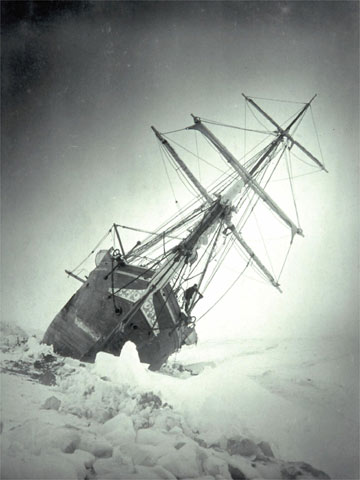
From this quote stated by Alexander Macklin, a physician who also happened to be the driver of a dog team, Alfred Lansing sets the stage of the novel. When Macklin boarded back on the ship to salvage some timber, he could hear the horrifying battle between the ships supports and the ice floe. At any point the ship could have caved in on him and Wild, filling this adventure story full of suspense. From this first chapter, mood is very prevalent. Within reading the first couple of pages, you are already sucked in, worried for what might happen next to the courageous adventurers. I could hardly contain myself while hearing Lansing's descriptions of the ships dying groans. This introduction excites the reader and keeps them turning the page, salivating over what might happen next.
Subscribe to:
Posts (Atom)